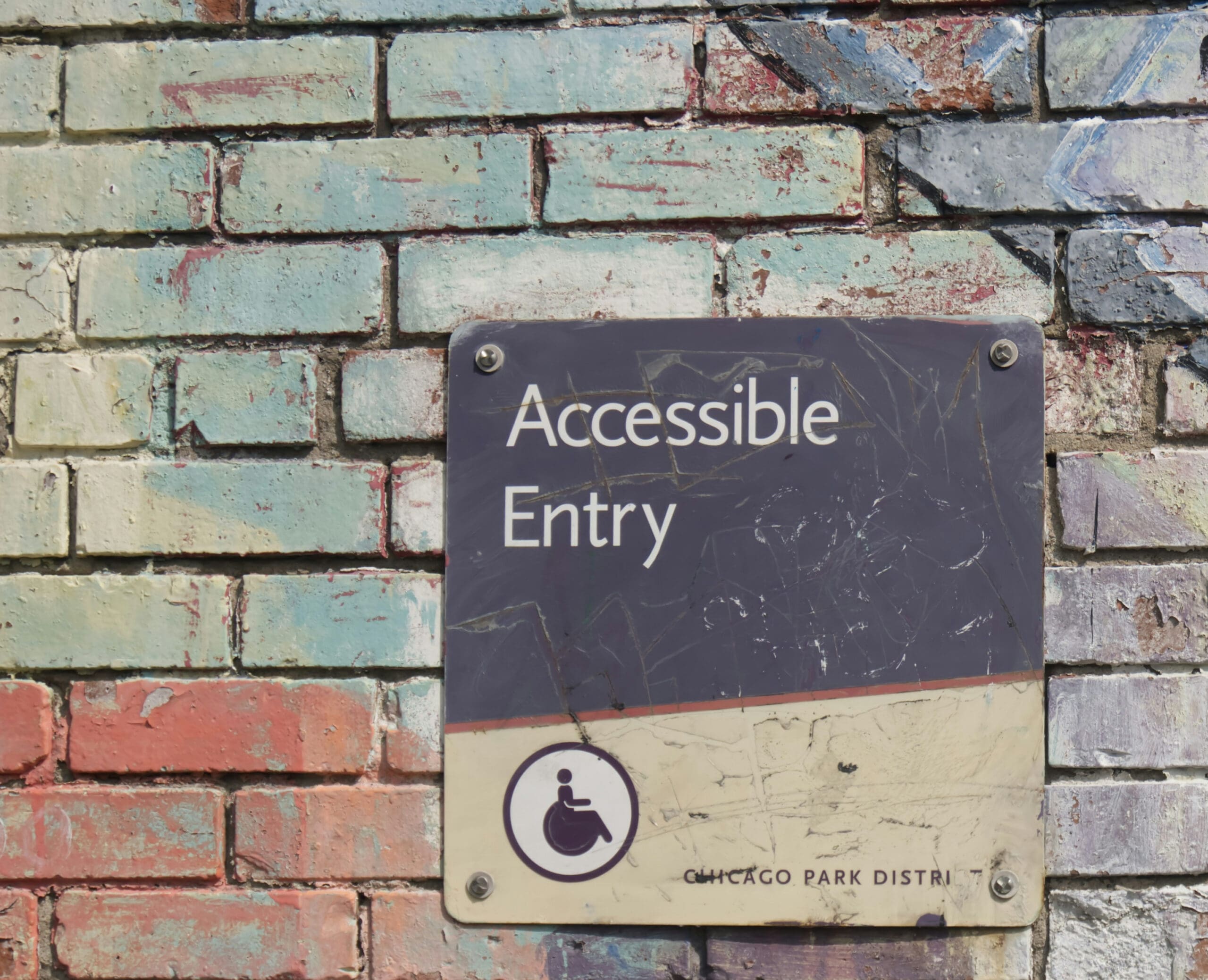
Daniel Ali photo /Unsplash
Published on May 19, 2026
Yes, your brand’s social media and digital platforms must be accessible to comply with the Americans With Disabilities Act (ADA), as commercial entities are considered places of public accommodation. Official guidance from the U.S. Department of Justice and a precedent-setting lawsuit established that Title III of the ADA extends beyond physical storefronts.
Web accessibility has become a strict compliance issue for both government entities and private companies. The law firm Seyfarth Shaw found more than 3,000 federal lawsuits filed in 2025 alone (a 27% increase from 2024), and Usablenet’s broader 2025 survey examined more than 5,000 cases in federal and state courts. So-called demand letters threatening legal action are also on the rise. Social media accessibility failures are frequently claimed in both digital accessibility civil lawsuits and demand letters.
For the public sector, state and local government services, programs and activities offered via websites and mobile apps—including social media—must be fully accessible to people with disabilities. While accessible social media offers enticing SEO and UX carrots, regulation is increasingly the stick that drives compliance.
Yes, the U.S. Department of Justice (DOJ) extended the compliance deadline by one year, to April 26, 2027, for larger communities and special districts. Smaller ones have until and April 26, 2028, to meet the technical standard.
Initially set to take effect in April 2026, the DOJ issued an interim final rule on April 20, 2026, pushing the dates back. Despite this temporary reprieve, the ADA’s legal requirement to provide effective public communication is still in place, and the de facto industry framework for web accessibility has already shifted to meet the new technical standard. The Title II rule is modeled on Level AA of the Web Content Accessibility Guidelines (WCAG) 2.1.
Purpose Brand’s live workshop delivers a clear, practical path to ADA-compliant social content that reduces legal risk and expands reach. Register Now!
The DOJ interim rule specifying WCAG 2.1 Level AA covers only government activity. However, its guidance for businesses open to the public states that the ADA’s “effective communication” mandate also requires businesses to communicate effectively with customers with disabilities. Following the WCAG standard is a court-tested defense against civil lawsuits over ADA compliance.
In a lawsuit against Domino’s Pizza, the U.S. Court of Appeals for the 9th Circuit ruled in 2019 that the ADA “applies to the services of a place of public accommodation, not services in a place of public accommodation.” Since then, federal courts have overwhelmingly adopted WCAG 2.1 Level AA as the legal benchmark for effective communication online, including social media.
Forward-thinking brands are acting now to audit their digital presence. If a brand is targeted by an ADA demand letter, the only reliable legal defense is to prove that content already meets this standard. Courts can dismiss claims if an accessibility error on a website or social media has been fixed and will not recur, but that argument succeeds only when a strict accessibility policy and workflow is already active.
Accessible social media improves your marketing reach by boosting your search engine visibility (SEO), increasing video completion rates and enhancing engagement across all user demographics.
Think of it as the digital “curb cut effect.” Just as physical sidewalks designed with curb cuts for wheelchair traffic also benefit people pushing baby strollers or travelers rolling heavy luggage, digital accessibility features promote discovery and usability for everyone.
When pitching accessibility to executive leadership, marketers should shift their framing from a “compliance burden” to an “algorithmic advantage.” Social media algorithms, search engines and AI web crawlers act very much like visually impaired users—they cannot actually “see” your graphic or watch your video. They rely on the exact same structural cues as a screen reader. The very things that make content accessible are the signals algorithms use to determine quality and distribute your posts to a wider audience.
Videos need captions because as much as 85% of social media videos are watched on mute, making text essential for both user comprehension and algorithm ranking.
Multimedia content is a challenge for people who are deaf or hard of hearing, but it is also consumed by multitasking Millennials in quiet offices and Gen Z users on noisy trains without headphones. Videos with accurate, human-reviewed captions show significantly higher completion rates and longer watch times—critical signals of quality for social algorithms and search engine results pages.
Most social media platforms support alt text natively, but they require creators to manually enter descriptive tags to ensure screen readers and search engines can understand the images.
The alt text HTML attribute actually originated during the era of slow dial-up modems to tell users what an image was before it loaded. Today, it is the primary vehicle for screen reading software to describe visual contents to blind or low-vision users. While social media sites have stepped up their accessibility tools, the workflow varies:
Just like in the dial-up era, descriptive alt text is a safety net. It turns visual assets like infographics or product photos into highly discoverable text data for algorithms.
CamelCase hashtags capitalize the first letter of each word (e.g., #DigitalMarketing), allowing screen readers to pronounce words individually and making them instantly readable for human users.
A carry-over from programming languages, medial capitals prevent software screen readers from misinterpreting a phrase as one jumbled, unpronounceable string of letters. Ultimately, the biggest benefit is usability: Hashtags in CamelCase are readable at a glance, proving once again that designing for accessibility improves the experience for everyone.
Yes, social media teams should absolutely be trained on ADA compliance and digital accessibility best practices. Social media has become a primary communication channel for brands, and inaccessible content can create legal risk, limit audience reach, and exclude users with disabilities. The Department of Justice and accessibility experts increasingly point to digital content. including social media, as part of an organization’s accessibility responsibilities.
Purpose Brand offers a Social Media ADA Compliance Workshop for marketing and social teams. The training is virtual, affordable, and time-efficient – a 90-minute workshop, including 30 minutes for questions. Participants should expect to learn about ADA/WCAG best practices, proper captioning and alt text, accessible content creation, and platform accessibility features. Organizations can also opt to receive custom accessibility audits. Learn more about the Social Media ADA Compliance Workshop.
As soon as you submit the form, we will send to you a link to download our report.